Why the government is betting billions on hydrogen
Green hydrogen is the only way to decarbonize fertilizer, steel, and shipping — and the government is making a huge bet for it. But what does it take to pay off?
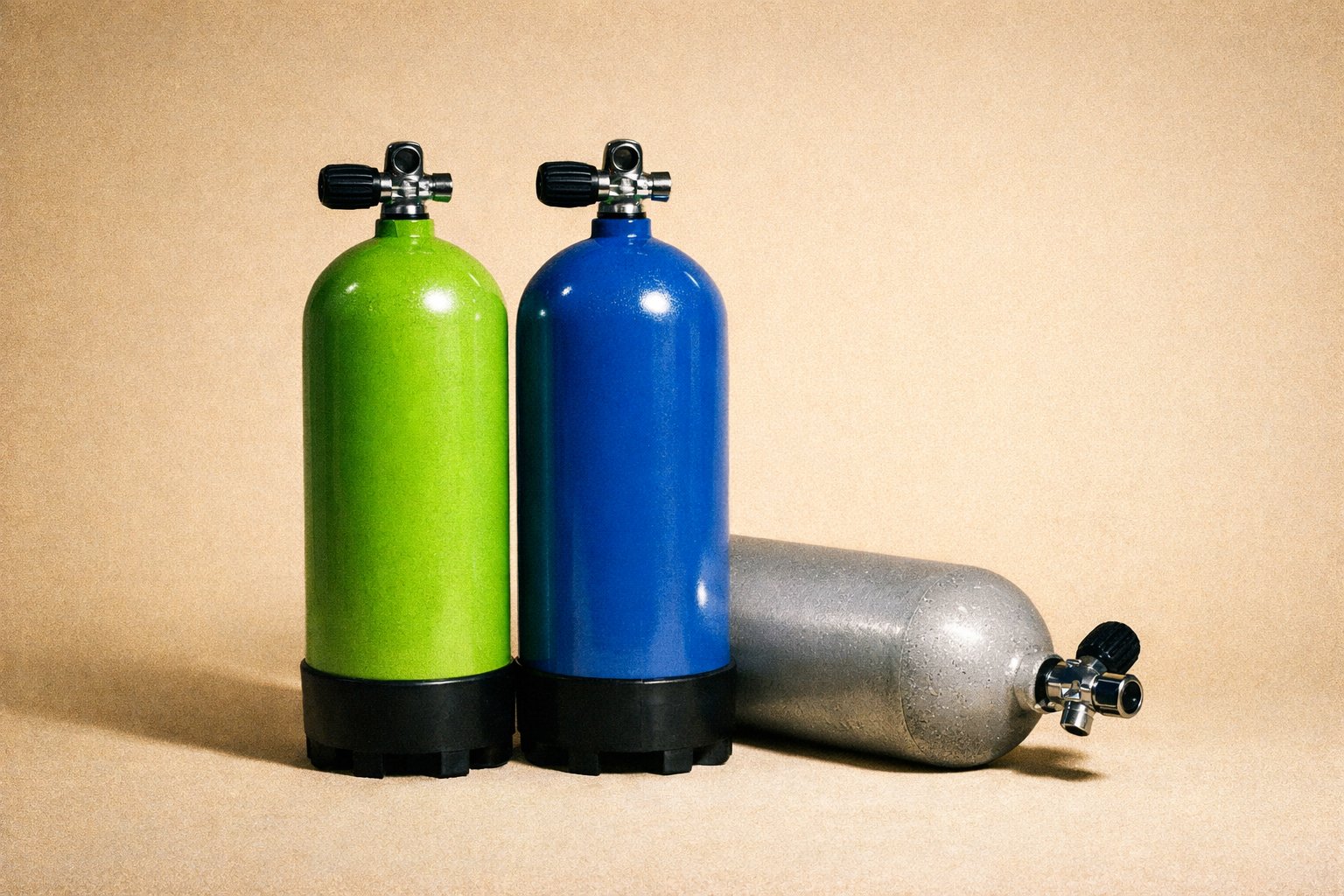
The colors of hydrogen — green (clean), blue (captured emissions), and grey (fossil-based) Generated by Sam (SIMMA)
You might remember hydrogen cars. Around 2007, Honda unveiled one that emitted nothing but clean water vapor. The media thought it was going to change the world, but it didn't.
So it's fair to ask: why is Indonesia betting $11 billion on hydrogen if cars couldn't make it work?
What hydrogen is actually for
Without hydrogen, humanity would starve. You literally can't make inorganic fertilizer without it (C&EN, 2019).
Organic fertilizers do work, but they're slow and expensive; manure takes months to process — that's one reason organic food costs more. Inorganic fertilizer is cheap, scalable, and feeding 8 billion people depends on it.
Unfortunately, most hydrogen today is made from natural gas — a process that emits CO₂. So the hydrogen we're using for fertilizer is actually dirty.
There's a cleaner way — split water into hydrogen and oxygen using renewable electricity. That's "green" hydrogen, and that's what everyone is after.
It's not just for food. Making steel requires getting oxygen out of raw iron. Traditionally, you mix coal with the iron. The carbon grabs the oxygen, and you get steel — plus a lot of CO₂.
There's a cleaner way. Instead of coal, mix in hydrogen; hydrogen reacts with the oxygen instead. Steel comes out, and the byproduct is clean water vapor (EFI Foundation, 2026).
This isn't hypothetical. Steel plants in Europe and the Middle East are already testing it. IESR projects Indonesia will need 1.29 million tonnes of hydrogen per year for steel by 2060 (IESR Green Hydrogen Study, 2026).
Then there's the stuff batteries can't touch.
Shipping and aviation face a fundamental problem: batteries don't pack enough energy for the weight. Jet fuel carries 44 megajoules per kilogram. Lithium-ion batteries only carry 0.9 megajoules per kilogram (Stanford, 2021; US DOE, 2020).
A battery-powered container ship crossing the Pacific would need batteries weighing more than the cargo. So, for shipping and aviation, hydrogen-derived fuels are the only option.
Specifically, ships will likely run on green ammonia (NH₃, made from hydrogen) and planes will use synthetic kerosene (also made from hydrogen). Both are still early in development — so don't expect guilt-free flights anytime soon.
Humanity can't live without food, buildings or global transport. Green hydrogen is the only realistic way to make them clean.
How clean is hydrogen?
Hydrogen doesn't exist on its own. It's always locked inside something — water (H₂O), natural gas (CH₄), or coal. To get pure hydrogen, you have to break those bonds. How you break them determines the "color" — and the color tells you how clean it is.
A quick note: hydrogen gas itself is colorless. These colors refer to the CO₂ emitted during production, not the gas coming out of the pipe.
Brown — the dirtiest
Coal gasification was the original method — cheap, dirty, and still used in China today. It produces about 20 kg of CO₂ per kg of hydrogen — more than double gray (IEA, 2023).
Gray — the standard
This is how most of the world's hydrogen is made — around two-thirds from natural gas, with about a fifth from coal (IEA, Global Hydrogen Review 2024). Take natural gas (methane), add high-temperature steam. The methane splits: CO₂ floats away, hydrogen is captured (Clean Energy Group, 2025). Indonesia already does this for fertilizer and refineries.
Blue — slightly less dirty
Same process as gray, but with carbon capture attached. The CO₂ gets buried instead of released. Costs range from $1.50/kg (cheap gas) to $2.40/kg even at high gas prices (Global CCS Institute, 2021). But it doesn't capture everything — 60–90% at best. Some call it a "bridge" to green. Others say it delays the inevitable.
Green — the one everyone's after
This is the truly smart, truly green option. Water is H₂O — two hydrogen atoms for every molecule. Run renewable electricity through it, and the water splits into hydrogen and oxygen. Zero CO₂.
It costs $3.86–$13.2 per kilogram today, because 40–70% of that is just the electricity bill (IESR, 2026). Globally, it sells at a premium; countries with net-zero targets (e.g. the EU, Japan, Singapore) can't use gray hydrogen (European Commission).
Why is the Indonesian government obsessed?
Green hydrogen sells at a premium today, and the government believes Indonesia can capture a large slice of this market (GGGI, 2025).
Indonesia has 3,687 GW of renewable energy potential — one of the best resource endowments on the planet. But less than 0.3% of it is being used (Tempo, 2024).
The logic is simple. Build solar farms at scale, get cheap electricity, and therefore cheap green hydrogen to sell to the world. This is the Saudi Arabia of Hydrogen thesis. Export green hydrogen with cheap renewable energy to Japan, South Korea, and Singapore, because they can't produce enough renewable energy themselves.
And foreign players are actively encouraging it.
Japan, through the AZEC (Asia Zero Emission Community) framework, sees Indonesia as a reliable, nearby hydrogen supplier for its clean energy transition. Singapore is land-constrained and needs imported clean energy to meet its net-zero targets. South Korea has massive hydrogen demand and limited domestic production capacity.
Real projects are already underway. Sembcorp (Singapore) signed a joint development agreement for a 100,000 tonnes/year green hydrogen facility in Sumatra — which would be the largest in Southeast Asia (Sembcorp, 2024). Meanwhile, a Danantara-ACWA Power-Pertamina consortium announced ~$10 billion in combined clean energy and hydrogen investments (Energy Connects, 2025).
What does it take to work?
The pitch sounds good on paper, but there are four things that need to fall into place so that the bet will pay off.
1. Cheap renewable electricity
This is the biggest one. 40–70% of green hydrogen's cost is just the electricity bill. If renewables aren't cheap, hydrogen won't be either.
What most people don't realize is that Indonesia's solar isn't as good as people think. The country's average solar irradiance is about 1,752 kWh/m²/yr — calculated from IESR's reported average of 4.8 kWh/m²/day (IESR IETO 2025).
That's lower than Chile's Atacama Desert (2,500 kWh/m²/yr) (WIPO, 2018), Saudi Arabia (2,227 kWh/m²/yr) (PV Know How), or Australia's outback (2,400 kWh/m²/yr) (ARENA, 2013). High cloud cover and rainforest humidity are considerable constraints.
Yet, there are still good pockets for solar — NTT's capital Kupang averages 5.80 kWh/m²/day (~2,117 kWh/m²/yr) of solar irradiation, on par with parts of Australia (World Bank/ESMAP, 2017). But NTT has zero hydrogen infrastructure. That brings us to the next problem.
2. Infrastructure
Hydrogen has to be compressed, stored, and shipped in specialized containers. Ports need new loading facilities. Electrolyzer factories need to be built. Transmission lines need to reach the renewable energy sources.
None of this exists at scale in Indonesia today.
The National Roadmap for Hydrogen and Ammonia — launched in June 2025 — outlines 215 action plans across regulatory, infrastructure, and export development phases (GGGI, 2025). The roadmap targets full commercialization and export capability only after 2044 (Norton Rose Fulbright, 2025). That's two decades away before the first shipment of commercial hydrogen leaves port.
The country is starting with pilot projects and hoping to scale. That's the right approach, but it means the payoff won't come soon.
3. Moving fast
Indonesia's green hydrogen cost range ($3.86–$13.2/kg) is competitive. The problem is that competitors are already moving down the cost curve faster.
Chile has better solar. Saudi Arabia has cheaper capital and the lowest renewable energy costs in the world. Australia has massive land, existing mining and energy infrastructure, and its government have been supporting hydrogen for years.
Indonesia's only unique advantage is proximity to customers. Japan, Korea, and Singapore are hours away by ship — not weeks from Chile or Saudi Arabia. In hydrogen shipping, where transport costs and boil-off losses matter, that distance advantage is real (IEEFA, 2024).
4. Lock in buyers early
First-movers who secure long-term offtake contracts will dominate the global hydrogen market. Japan, Korea, and Singapore are actively shopping for hydrogen suppliers (ERIA, 2022; Baringa, 2023). Indonesia needs to lock them in before competitors do — because once those 15-year agreements are signed with Chile or Australia, the country becomes a backup option, not a primary supplier.
If Indonesia can't secure buyers fast enough, that export pillar collapses. The country would still use green hydrogen domestically — for fertilizer, steel, and eventually shipping — but the "Saudi Arabia of Hydrogen" thesis would never fully realize.
What this means
Hydrogen won't power your car or your home. But it's chemically necessary for the things that keep the world running — fertilizer, steel, the ships and planes that move everything you buy.
Indonesia sees an opportunity. The renewable potential exists, the world wants what it can produce, and the first projects are getting built. But the gap between potential and reality is still enormous.